What to keep in mind
- Describe what you observed rather than judging someone’s character.
- Check the expectation and listen to their perspective.
- Agree on a specific change and follow up.
You need to tell someone that a piece of work needs changing.
Perhaps a report arrived with missing information. A colleague interrupted you several times during a meeting. Or someone you manage has misunderstood an important part of their role.
You want to address the issue, but you do not want the conversation to sound like a judgement about who they are.
Giving feedback without making it personal starts with describing something specific. Explain what happened, why it matters and what you would like to discuss. Then give the person a chance to respond.
Choose the issue you need to address
Before the conversation, decide what needs attention.
“Your attitude needs to improve” does not tell the other person which behaviour you mean. They may have a completely different understanding of the situation.
Ask yourself:
- What did I actually observe?
- Which example best explains the concern?
- What effect did it have?
- What needs to happen differently?
If you cannot answer those questions yet, gather the information you need before making a judgement.
Keep the discussion manageable. Choose the issue that matters now rather than adding every frustration you have been holding onto.
Check that the expectation was clear
You may know how you expect a task to be completed. The other person may not.
Before you describe something as a failure to meet expectations, check what was agreed.
Was the deadline confirmed? Did you explain which information the report needed? Has the person been shown the process you want them to follow?
If you did not explain something clearly, acknowledge it.
“I can see that I didn’t specify which figures needed to be included. Let’s go through them so we have the same understanding for the next report.”
You can still discuss the outcome. Recognising your part in a misunderstanding gives you a clearer place to start.
Choose a private setting
If you need to address a concern with one person, choose a setting where you can speak without an audience.
A rushed comment in a team meeting may leave them unsure whether to explain, apologise or defend their work in front of everyone.
Arrange a short conversation and give enough context for them to understand its purpose.
“Could we talk through the client report this afternoon? There are a couple of sections I’d like us to review before the next one.”
Raise the concern while you can both still recall the details. If you are too frustrated to discuss it calmly, take time to prepare first.
Describe the example without adding a label
Words such as “careless”, “difficult” or “unprofessional” can leave the person trying to defend their character rather than understand the concern.
Describe what you saw or heard.
“The report was missing the figures for two regions, so we couldn’t complete the comparison before the client meeting.”
If the concern involves a meeting, you could say:
“During yesterday’s discussion, you began speaking three times while I was still explaining the proposal. I wasn’t able to finish the key points.”
Be accurate about the example and the effect. If you are unsure about a detail, ask rather than filling in the gap with an assumption.
Ask for their view and listen
After explaining the concern, pause and invite the person to respond.
“Can you talk me through what happened?”
They may explain a problem you had not considered, point out missing information or disagree with your account.
Listen before deciding what the explanation means. Ask follow-up questions where you need more detail.
For example:
“You were waiting for those figures from another team. When did you realise they might not arrive in time?”
You do not have to accept every explanation as a reason to leave the concern unresolved. Understanding the situation helps you discuss a response that addresses the actual problem.
Make the next step clear
“Be more careful” leaves the other person to work out what you mean.
Describe the change you need, then check what will help them make it.
“For the next report, please check that every region is included before sending it. If figures are missing, let me know by Wednesday so we can decide how to handle the gap.”
For the meeting example, you might say:
“I’d like us to let each person finish their point before responding. If something needs clarifying, could we make a note and come back to it?”
If you manage the person, be clear about the expectation and any support you will provide. If you are speaking as a colleague, explain what you are asking for and discuss how you can work together.
If they disagree, clarify where your views differ
Someone may hear feedback as criticism even when you have prepared carefully.
If they disagree, ask which part they see differently.
“Is it the example, the effect on the work or the change I’m asking for that you see differently?”
You may need to check a fact or acknowledge something you missed. You may also need to explain why an expectation still applies.
Avoid arguing about whether the person is being “too sensitive”. Return to the specific concern and give them time to respond.
If the discussion involves formal performance management or a serious workplace concern, follow your organisation’s procedures and involve the appropriate person.
Follow up on what you agreed
Before finishing, check that you both understand the next step and when you will review it.
Your follow-up can be brief.
“Let’s check how that process worked after the next report.”
If the change helps, acknowledge it specifically. If the problem continues, return to the agreement and discuss what is getting in the way.
Keep any record of the conversation appropriate to your role and your workplace procedures.
Common questions about giving feedback
How do I give feedback without sounding harsh?
Use a specific example, explain its effect and describe what you want to discuss. Keep your language clear and respectful. Avoid labels or guesses about the person’s motives.
Should I start with praise before raising a concern?
Share positive feedback when you have something specific and relevant to acknowledge. Make sure the concern remains clear rather than hiding it between compliments.
What if the person says I am making it personal?
Ask which part of your wording felt personal. Check whether you used a label or made an assumption, and correct that if needed. Return to the example, its effect and the next step you want to discuss.
Can I give feedback to a colleague who does not report to me?
You can raise a concern about how your work is affected and ask to discuss a change. Be clear about your role and the request you are making. Where necessary, involve the person responsible for managing the work.
Prepare one useful example
Before your next feedback conversation, write down what happened, why it matters and the change you want to discuss.
Read your opening aloud. Does it describe the issue clearly? Have you included any assumptions you need to check?
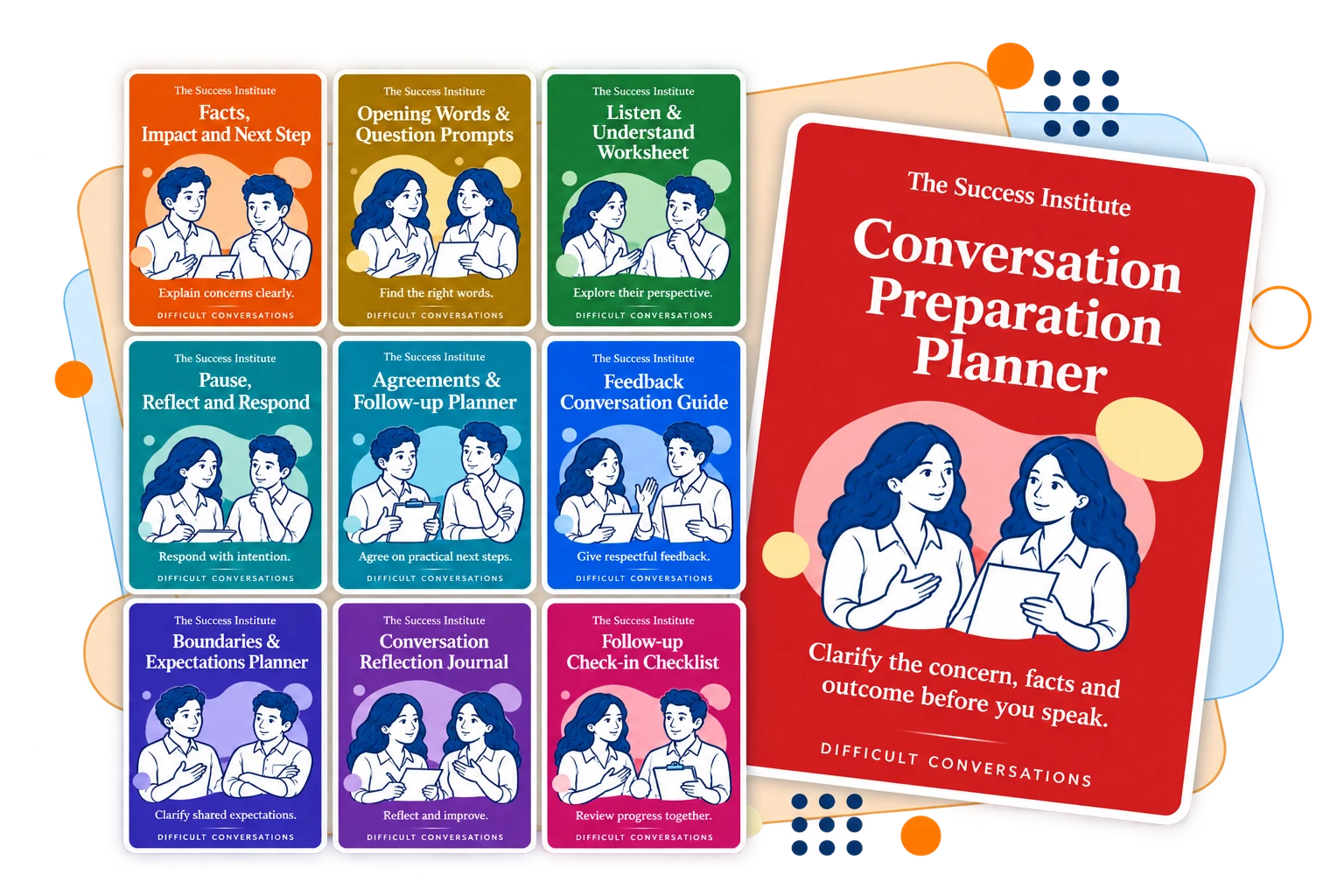
The Feedback Conversation Guide in Clear Conversations Toolkit can help you prepare your words and keep the discussion focused.
You can also use the free Conversation Preparation Checklist to organise your thoughts before the conversation.
A brief application outside work
For an occasional conversation with a friend or family member, the same distinction between behaviour and character can be useful. Describe what happened without giving the person a label. “When our plans changed after I had left home, I had to make another trip” gives you something specific to discuss. Explain what would help next time, then ask how they see it. A personal relationship does not have the same responsibilities as a manager and team member, so focus on a shared agreement rather than treating the conversation as a performance review. Allow the other person to explain any detail you missed. You might agree on a simple message before changing a shared plan, rather than debating who was more considerate. Keep the request specific enough that both people know what to do.
About The Success Institute
Practical communication and management resources for Australian managers, teams and professionals.
Meet Paul Puckridge →